
- April 9, 2026
- Posted by: Admin
- Category: Blogs
Introduction: Why Google Isn’t the First Stop for Gen Z Anymore?
Remember the days when “just Google it” was the universal advice for any question? For Gen Z, those days are fading fast. Today, the first stop for discovery isn’t a search engine, it’s social media search. Platforms like Instagram, TikTok, YouTube, and even LinkedIn are becoming the go-to hubs for exploring products, trends, and services.
This shift is driven by a mix of Gen Z search habits and the desire for fast, visual, and trustworthy content. Instead of scrolling through long text-heavy pages, they prefer seeing a demo video, influencer review, or authentic recommendation directly in their feed. That’s why social media search is no longer just a feature; it’s a revolution in how brands are found.
Swipe, Scroll, Search: How Social Media Became the New Discovery Hub?
Gen Z doesn’t have time for pages of text. They want instant answers, visuals, and real-life experiences. That’s why social media search is now their first stop when discovering new brands or trends.
A quick scroll on Instagram or a TikTok video can tell them everything, from product features to pricing, without leaving the platform. Unlike Google, social media gives real-time engagement, peer opinions, and recommendations from people they trust. For brands, this means social media discovery is no longer optional; it’s critical to being found.
Why Gen Z Trusts Social Platforms More Than Traditional Search?
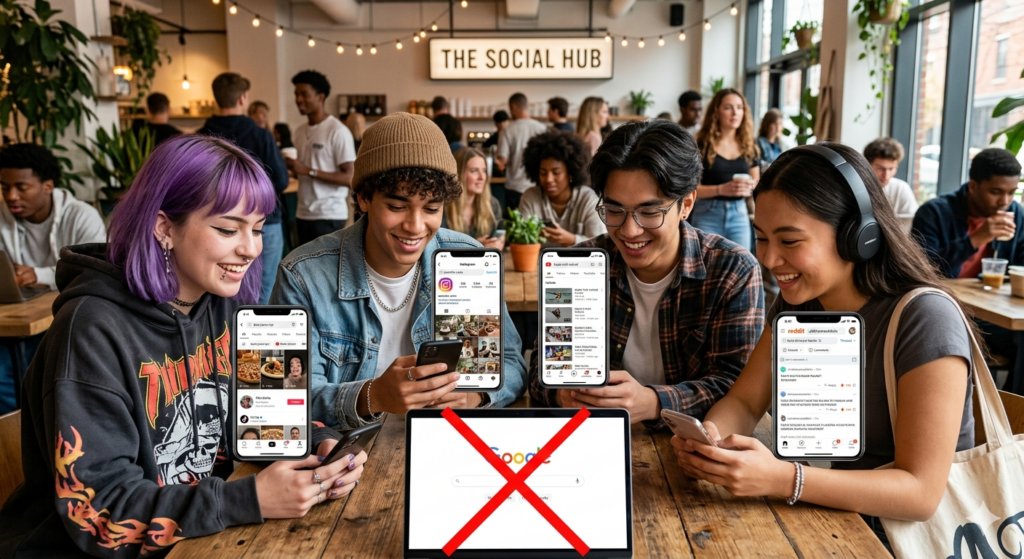
Here’s the reality: Google gives information, but social media gives context. When a friend, influencer, or brand posts a review, it carries weight. Gen Z values authenticity, and platforms like Instagram and YouTube are full of user-generated content that feels genuine.
This is why Gen Z search habits are shifting. They don’t just want facts, they want validation. Seeing a product in action, reading real reviews, or watching a tutorial influences decisions faster than a search engine snippet ever could.
Visuals, Videos, and Influencers: The Ingredients of Social Search
If a picture is worth a thousand words, a TikTok or Instagram reel is worth ten thousand. Social media thrives on visual storytelling, which makes discovery engaging and memorable. Brands that leverage videos, reels, and carousel posts can make products instantly relatable.
Influencers also play a huge role in social media marketing trends. A trusted creator reviewing a product or service instantly builds credibility. This combination of visual content and authentic voices is why social media search is replacing traditional search for younger audiences.
How Brands Can Win on Social Search Without Being Pushy?
The secret is subtlety. Gen Z can spot aggressive marketing from a mile away. Brands must focus on education, entertainment, and engagement rather than direct promotion.
- Use stories and reels to show real-life product use
- Encourage user-generated content to amplify trust
- Optimise posts with hashtags and keywords for easy social media discovery
- Engage with comments and DMs to show authenticity
When done right, social media search doesn’t feel like marketing; it feels like helpful guidance.
Case Studies: Brands That Nailed Social Media Discovery
Some brands have cracked the code by combining creativity and strategy:
- Glossier used Instagram stories and peer reviews to create buzz without running traditional ads.
- Zomato leveraged social media campaigns with relatable content, memes, and user reviews to engage Gen Z.
- Nykaa maximised influencer marketing to make products discoverable and trustworthy, driving both awareness and sales.
These examples show how brands can leverage Gen Z search habits and social media marketing trends to stay top of mind.
Adapt or Miss Out – The Future of Search Is Social
For Gen Z, the path to discovery has shifted from Google to social platforms. Social media search is now a primary tool for exploring products, services, and experiences. Brands that ignore this shift risk missing out on younger, digitally-native audiences.
By understanding Gen Z search habits, focusing on authentic engagement, and leveraging social media discovery, businesses can stay relevant and visible. The key is to educate, entertain, and engage, rather than push sales aggressively. In a world where attention is the most valuable currency, being found on social media is no longer a trend; it’s the future.
FAQs
1. What is social media search, and why is it important for brands?
Social media search refers to using platforms like Instagram, TikTok, YouTube, and LinkedIn to find products, services, and information. For brands, it’s crucial because Gen Z increasingly discovers and evaluates businesses through these channels instead of traditional search engines.
2. How are Gen Z search habits different from those of older generations?
Gen Z prefers visual, interactive, and authentic content. They trust peer reviews, influencer recommendations, and short-form videos over standard text-based search results on Google.
3. Can social media search really replace Google?
While Google is still relevant, social media platforms are becoming the first point of discovery for many Gen Z users. Brands that optimise content for social search reach younger audiences more effectively.
4. How can brands leverage social media search effectively?
Brands should focus on creating engaging, authentic, and visually appealing content. This includes using reels, stories, short videos, user-generated content, hashtags, and interactive posts to make their products discoverable.
5. How did White Elephant Tech help brands with social media search?
White Elephant Tech managed social media campaigns for multiple clients, optimising content for discovery and engagement. By combining creative visuals, authentic messaging, and influencer collaborations, they helped brands connect with Gen Z audiences and boost visibility organically.
6. Which platforms are best for social media discovery?
Instagram, TikTok, YouTube, and LinkedIn are currently the most effective platforms for social media discovery. Each platform has its own audience and content style, so brands should tailor their strategy accordingly.