
- August 6, 2025
- Posted by: Admin
- Category: Blogs
Introduction: Why Performance Marketing Matters for Startups
For startups operating with limited budgets and high expectations, every marketing rupee must deliver measurable results. This is where performance marketing steps in as a strategic game-changer. Unlike traditional brand marketing, performance marketing is result-driven; you only pay for actual performance, be it clicks, conversion rate, leads, or sales.
Startups often face intense pressure to scale quickly, prove their product-market fit, and attract investors. Performance marketing allows them to do this with precision. By leveraging tools like paid search, social media ads, affiliate marketing, and display advertising, startups can reach the right audience at the right time, and most importantly, track every interaction.
Another major benefit is data-driven decision-making. Performance marketing campaigns provide real-time feedback, helping startups understand what’s working and what needs improvement. This flexibility allows them to refine strategies faster than traditional marketing ever could.
In short, performance marketing offers startups a powerful mix of speed, scale, and accountability, making it an essential part of any smart growth strategy.
Mistake 1: Running Ads Without a Clear Goal
One of the most common mistakes startups make in performance marketing is launching ads without first defining what success looks like. Often in the excitement to “go live,” campaigns are created without asking, “Why are we doing this?” Without a goal, there’s no way to measure whether your efforts are paying off or where to improve.
It’s like setting out on a road trip with no destination; you’ll keep moving, but you won’t know if you’ve arrived. Whether you’re aiming for more sales, app installs, leads, or simply brand awareness, having a clearly defined and realistic goal is crucial to guide every decision in your performance marketing plan.
Why Setting Clear Objectives is Non-Negotiable?
Performance marketing is built on data, and data needs direction. Without a goal, your analytics are just numbers. But when you have a clear objective, like reducing your cost per acquisition (CPA) or increasing your return on ad spend (ROAS), you can track, tweak, and optimise every part of your campaign.
This also helps you choose the right platforms, allocate your budget wisely, and create sharper ad creatives. So, before you spend your first rupee, ask: What exactly do I want to achieve? That answer will shape everything else.
Mistake 2: Expecting Overnight Results
Startups are often in a hurry and understandably so. With limited budgets and high pressure to scale quickly, there’s a strong desire for immediate returns. But performance marketing doesn’t work like a vending machine. Just because you’ve put in money today doesn’t mean results will come tomorrow.
Expecting instant results can lead to disappointment, poor decision-making, and premature changes in strategy. It also creates unrealistic pressure on your team and campaigns, making it harder to stay focused on long-term goals.
Why Patience Pays Off in Performance Marketing?
Algorithms need time to learn user behaviour, gather insights, and deliver your ads to the right people. Campaigns require testing, A/B comparisons, and constant optimisation. Initial results might be slow, but that doesn’t mean your strategy is failing.
Performance marketing rewards those who stay consistent, analyse patiently, and fine-tune based on real-time data. Give your campaigns time to breathe, and you’ll be surprised how strong and steady the results can be over weeks and months, not just days.
Mistake 3: Using the Same Strategy on Every Platform
Another big mistake in performance marketing is assuming all platforms are the same. Many startups create a single campaign and push it across Google, Facebook, Instagram, and LinkedIn, expecting the same results. But this one-size-fits-all approach usually underperforms.
Each platform has a different audience mindset and purpose. Someone scrolling Instagram is not looking for the same thing as someone searching on Google. What works in one space might fall flat in another.
How Platform-Specific Thinking Boosts Results?
Performance marketing thrives on relevance. And to be relevant, your campaign needs to match the tone, behaviour, and expectations of the platform it’s on. For instance, short videos and visual storytelling work better on Instagram, while professional insights perform better on LinkedIn. Google demands strong keywords and intent-driven landing pages, whereas Facebook rewards creative hooks.
By tailoring your content and messaging to fit the nature of each platform, you improve not only engagement but also efficiency, lowering your cost per click and increasing conversions. Think of each platform as a unique room; you can enter all of them, but you can’t speak the same way in each.
Mistake 4: Ignoring Data Analytics in Performance Marketing
One of the biggest mistakes startups make in performance marketing is not giving enough importance to data analytics. They often focus more on creating ads or spending budgets rather than understanding how those efforts are performing. Without a clear picture of what’s working and what’s not, decision-making becomes guesswork. This leads to wasted resources, poor targeting, and missed growth opportunities. Data is not just for large companies; even the smallest startup can benefit from tracking results properly. Analytics helps you move from assumption to strategy.
Metrics That Matter and What to Watch For
Not all numbers carry equal weight. Many new marketers get caught up in vanity metrics like impressions or likes, which may look good but don’t always contribute to actual growth. What truly matters are metrics like conversion rate, cost per acquisition (CPA), return on ad spend (ROAS), bounce rate, and customer lifetime value (CLTV). These figures reveal the effectiveness of your campaigns and where improvements are needed. By regularly tracking the right data, startups can optimise their marketing efforts, make smarter budget decisions, and scale faster with confidence.
Mistake 5: Not Testing Enough Variations in Campaigns
One of the biggest missed opportunities in performance marketing is sticking with just one version of your ad creative or message. Many startups invest time and effort into building a single perfect campaign and expect it to work magic everywhere. But here’s the truth—no one can predict exactly what will click with your audience the first time.
Without testing, you’re just guessing. Even a small change in the image, headline, call-to-action, or colour can make a huge difference in results. Relying on just one variation means you’re limiting your chances of understanding what truly works.
Why A/B Testing and Creative Experimentation Matter?
Performance marketing is not a “set it and forget it” model; it’s an ongoing experiment. A/B testing allows you to run two or more versions of your ad and see which performs better. Maybe version A gets more clicks, but version B gets more conversions. This kind of insight helps you make data-driven decisions instead of relying on assumptions.
Even small changes, like using a question instead of a statement in your headline or switching from an image to a short video, can improve engagement. Testing also helps reduce ad fatigue, where the same creative shown repeatedly starts to lose effectiveness.
In short, the more you test, the more you learn. And the more you learn, the smarter your performance marketing strategy becomes.
How Startups Can Fix These Performance Marketing Mistakes?
Even the smartest startups slip up. But the good news? Every mistake you make in performance marketing is a chance to learn, tweak, and come back stronger. Let’s break down how to actually fix these common errors and build campaigns that don’t just run, but perform.
Practical Tips and Actionable Strategies
- Define Clear, Realistic Goals
Before jumping into any campaign, take a pause. What are you aiming for—brand awareness, lead generation, app installs, or direct sales? Be specific. Set measurable KPIs (Key Performance Indicators), such as CTR (click-through rate), CPA (cost per acquisition), or ROAS (return on ad spend), so you can track real progress. - Choose the Right Platform Based on Your Audience
Every platform serves a different purpose and audience. B2B? LinkedIn might be your playground. Targeting Gen Z? Instagram or YouTube Shorts could be the key. Match your message to the platform and speak your audience’s language. - Start with Small Budgets, Then Scale with Performance Marketing
Don’t pour all your funds into one campaign. Test small, track results, then scale what’s working. It’s like building a house; you lay the bricks one at a time, not all at once. - Use Analytics to Guide Every Move
Keep an eye on key metrics daily or weekly. Platforms like Google Ads, Meta Ads, or third-party tools offer dashboards that show what’s working. Follow the data trail. - Test, Learn, Repeat
A/B testing should be your best friend. Test different versions of ad copy, creatives, and landing pages. Don’t assume, know what works based on actual results. - Hire or Consult Performance Marketing Experts
If this isn’t your strength, don’t shy away from getting help. A little expert guidance early on can save a lot of money later.
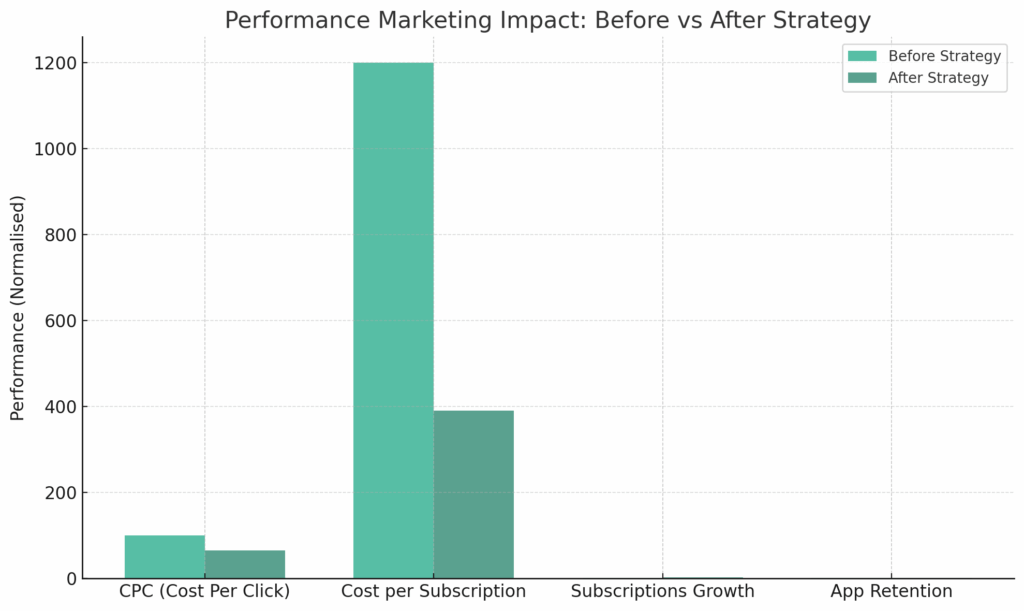
Final Thoughts: Building a Smart Startup Strategy with Performance Marketing
The startup world is exciting, but it’s also brutally competitive. You don’t get second chances to make a strong impression. That’s why performance marketing should be treated not just as a tactic, but as a strategic pillar of your growth journey.
Think of your campaigns as ongoing conversations with your audience. Listen, adjust, and optimise as you go. Don’t chase trends blindly; build a foundation based on your unique product, audience, and goals.
When done right, performance marketing isn’t just about getting clicks; it’s about building a relationship with your users, one ad at a time. And when startups align their vision with solid marketing execution, they don’t just survive, they scale, thrive, and lead.
So keep learning, keep testing, and remember: every rupee spent should bring you insight, if not immediate returns.